CANTEL, Guatemala — Continuing construction of Guatemala’s first Santa Muerte temple, complete with a 36-foot effigy of the Skeleton Saint, is fueling controversy both nationally and in the town where it’s being built. Opponents—apparently mostly Pentecostals—have escalated their protests from social media to an on-site demonstration. Guatemala has the world’s largest Pentecostal population per capita, and the great majority view the fastest growing new religious movement on the planet as satanic, engaging in what they call “spiritual warfare” against it.
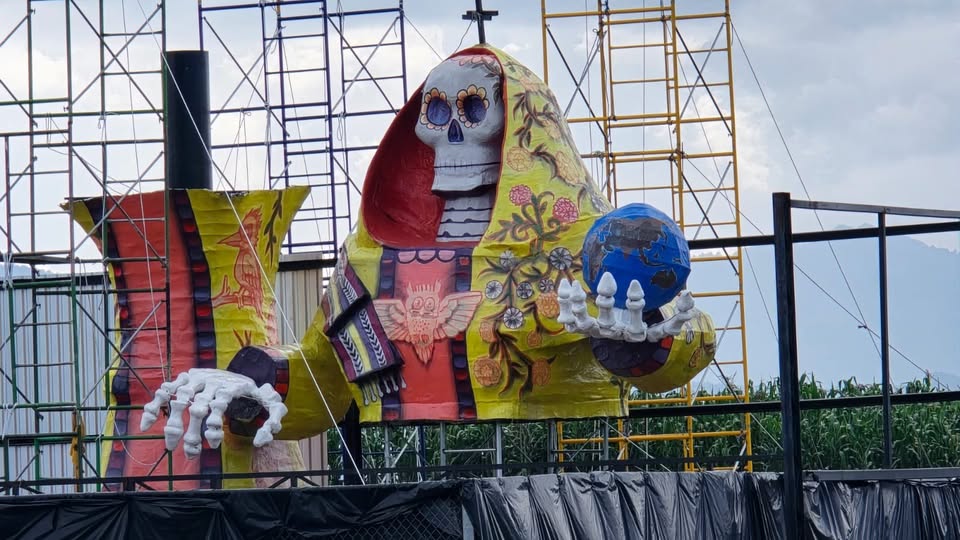
On March 1, 2025, community and religious leaders and local residents staged a large protest against the Encanto del Keme center in Llanos de Urbina, Cantel, Quetzaltenango. The rally began on a local soccer field, just days after residents awoke on February 21 to see the towering effigy installed on temple grounds.

Local critics say the owners lack a valid construction permit. New photos show scaffolding in place and bricklayers at work, despite the ongoing dispute.
The Municipality of Cantel fined the owners Q500,000 on March 31, 2025, but the penalty was appealed and remains unresolved. On May 8, the First Civil Court of Quetzaltenango granted the temple owners an injunction allowing construction to continue, ruling that no actions may be taken to restrict freedom of religion or movement.
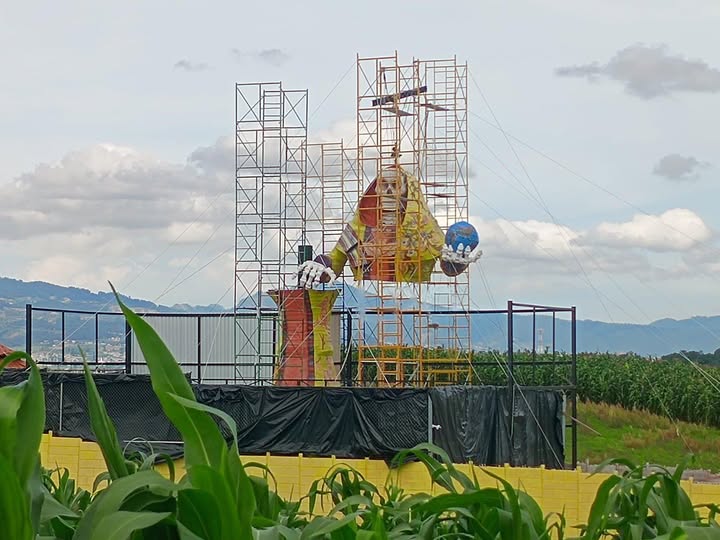
The giant effigy of the Mexican death saint, visible from far away due to its size, also stands near a prison—another factor heightening local concern over the project’s symbolism and alleged criminal connections.

Interestingly, Guatemala has its own skeletal folk saint of death, Rey Pascual, who is the oldest of the the three Latin American skeleton saints with his own temple in the town of Olintepeque, just a half-hour drive away from Llanos de Urbina. No national controversy has ever erupted over native folk saint of death, Rey Pascual, because he is far less known than Mexican Santa Muerte and hasn’t been linked to organized crime by Guatemalan mass media.

 Most Holy Death